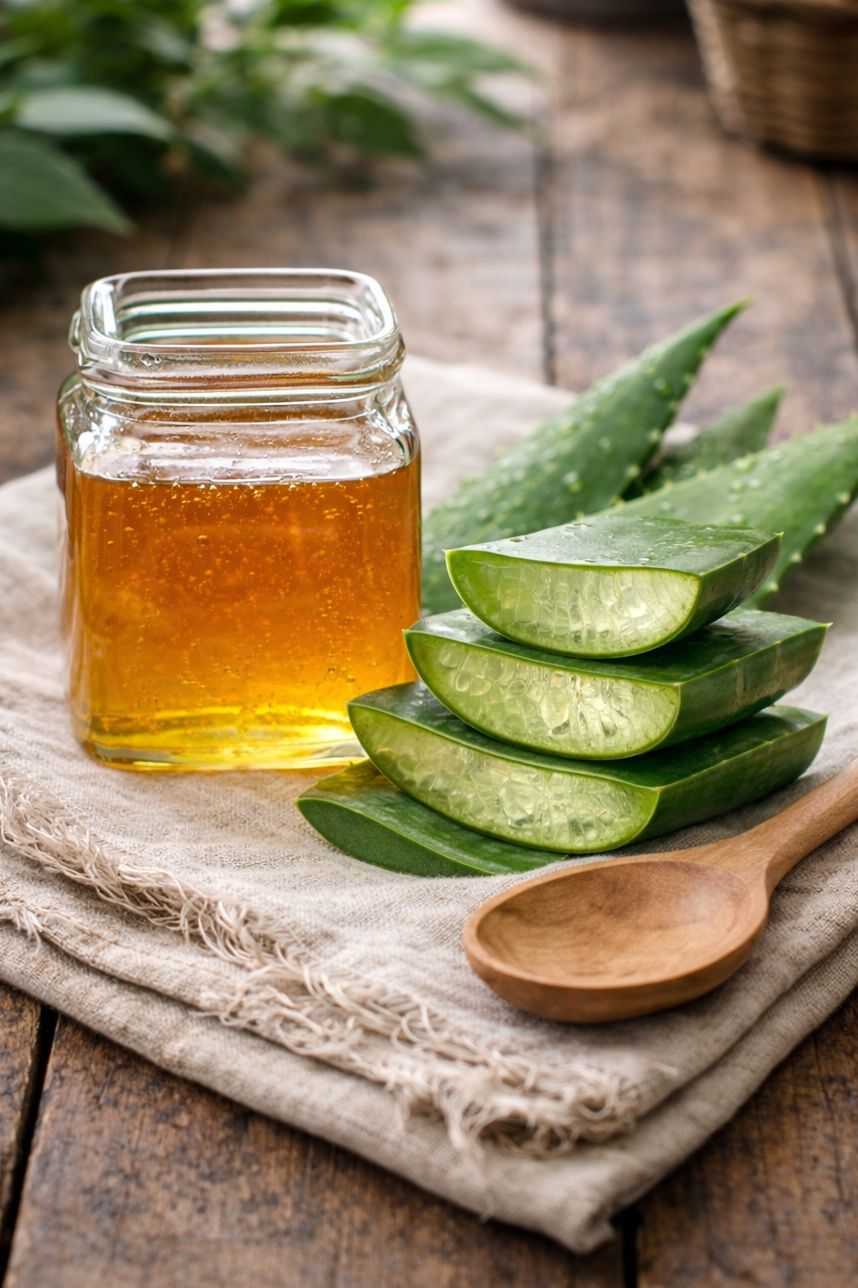
6 Pure Ingredients For Your Natural Skincare Routine
This post contains affiliate links, which means if you purchase using those links, I earn a small commission at no extra charge to you. I only promote products I have used and loved.
Have you ever seen a cosmetic ad and felt that pull? The one in the back of your mind that whispers, peptides…hyaluronic acid…ceramides…if I get that cream, maybe my skin will look twenty-seven again.
Did you know most of those ingredients were reverse-engineered from long-used, natural sources? Yep, things like Hyaluronic acid, Retinol, Salicylic Acid, and those ubiquitous “peptides”. For centuries, the natural world nourished our skin and bodies, but mass producing beauty products that can sit on shelves for long periods, are consistent in color/texture/concentration, and will make a company money means creating synthetic versions of these miracle compounds. After all, Big Makeup Brand can’t exactly patent the formula for ‘willow bark’ and to make anything last forever requires other synthetic stabilizers and preservatives.
Your skin is your largest organ and your body’s main barrier against the world. That should make us think a little bit about what we put on it, right?
Over time, we’ve learned to distrust the natural world, conditioned to believe these things won’t work as well as their chemically formulated counterparts, so we give a little. We buy that serum, even though every ingredient after ‘water’ looks a bit like someone fell asleep on the keyboard. We fall into the trap of believing white lab coats and familiar brand names equal legitimacy. But to get the benefits of these wrinkle-fighting, anti-aging, ultra-moisturizing products, it usually means slathering your skin with a host of other ingredients that aren’t so great–and maybe even downright harmful. A look through the EWG’s ingredient ratings is enough to make you toss everything currently residing in your vanity drawers! For instance, retinol (vitamin A) in the presence of UV rays, breaks down into free radicals that damage DNA and cause mutations. It is considered a ‘moderate’ cancer risk. I’d hate to depend on retinol and forget my sunscreen for a day.
Don’t even get me started on sunscreen. Talk about toxic sludge.
However, bakuchiol—which makes our list—is taken primarily from the babchi plant, is photostable, and has been shown to be as effective as retinol over time?
In a world full of complicated skincare routines and ingredient lists that require a chemistry degree to understand, there is something refreshing about returning to the basics.
Natural skincare doesn’t have to be mind-boggling. Often, the simplest ingredients are the most effective and you don’t need many to cover the shortlist of your skin’s needs, from moisturizing to wrinkle-minimization to toning.
Here are six pure, time-tested products that can form the foundation of a natural skincare routine.
1. Tallow (Deeply Nourishing Moisture)
Rendered grass-fed beef tallow has been used historically as a skin balm because its fatty acid profile closely resembles the oils naturally produced by human skin.
Benefits
- Rich in vitamins A, D, E, and K
- Strengthens the skin barrier
- Deeply moisturizing and soothing
Use whipped tallow balm as an all-purpose moisturizer.
2. Jojoba Oil (Balances Natural Oils)
Jojoba oil is technically a liquid wax that mimics the skin’s natural sebum. Because of this, it absorbs easily and works well for both dry and oily skin.
Benefits
- Lightweight hydration
- Helps balance oil production
- Excellent for oil cleansing
3. Raw Honey (Gentle Cleanser)
Raw honey has been used traditionally as a natural skin treatment because of its antimicrobial and moisture-retaining properties. Unlike soap, it doesn’t strip the skin’s natural oils. Instead, it draws moisture into the skin while lifting away dirt and impurities, making it especially helpful for dry, sensitive, or acne-prone skin.
Benefits
- Naturally antibacterial
- Hydrates and softens skin
- Helps calm irritation
It can be used as a simple face wash or left on as a soothing mask. The key is raw, unprocessed honey. To cleanse, dampen face with warm water. Then warm a small amount of honey in your fingers and spread over face, focusing on places where oil and makeup accumulate. If able, leave on for 1-2 mins for ultimate hydration. Rinse with warm water, using a washcloth to help remove if needed.
4. Aloe Vera (Cooling and Repairing)
Pure aloe vera gel is well known for its ability to soothe and hydrate the skin. The clear gel inside the leaves is rich in water, enzymes, amino acids, and antioxidants that help hydrate, calm inflammation, and support skin repair. Because it is lightweight and cooling, aloe works well for many skin types. Use as a base layer, not as a primary moisturizer.
Benefits
- Cooling for irritated skin
- Supports skin repair
- Light, refreshing hydration
- Great for post-sun care
Look for:
- Aloe barbadensis leaf juice as the first ingredient
- Minimal additives
- No artificial dyes
How to use:
- Cleanse your face (honey cleansing works well).
- While skin is still slightly damp, apply a pea-sized amount of aloe gel.
- Let it absorb for about 30 seconds.
- Follow with a moisturizing oil such as:
- jojoba oil
- rosehip oil
- tallow balm
5. Rosehip Seed Oil (Nutrient-Rich Botanical Oil)
Rosehip oil is pressed from the seeds of rose hips and is rich in essential fatty acids, such as omega-3 and omega-6, vitamins A, C, E and antioxidants. It has long been used to help even skin tone, protect from free radicals and environmental stressors. Great for eczema prone skin.
Benefits
- Supports skin renewal
- Helps improve uneven tone
- Lightweight but nourishing
In the morning, use after cleansing to help restore skin’s natural barrier. In the evening, put it on as your last layer for all-night hydration.
6. Bakuchiol (Plant-Based Skin Renewal)
Bakuchiol is a botanical compound derived from the babchi plant (Psoralea corylifolia), which has been used in traditional herbal practices for centuries. In modern skincare it is often described as a gentler, plant-derived alternative to retinol.
Benefits
- Encourages skin renewal
- Helps improve the appearance of fine lines
- Supports collagen production
- Generally well tolerated by sensitive skin
Unlike retinol, bakuchiol typically does not cause the same level of irritation or sun sensitivity. Avoid using it directly with vitamin C serums to avoid irritation.
A Simple Natural Skincare Routine
A minimal routine built around these ingredients might look like:
- Cleanse with raw honey
- Apply aloe vera for hydration
- Moisturize with tallow or jojoba oil
- Use rosehip oil and bakuchiol at night for skin renewal
Natural skincare doesn’t need to be complicated. Often the most nourishing approach is simply choosing ingredients that are pure, thoughtfully sourced, and gentle on the skin.
 Millstone & Meadow
Leave a comment